

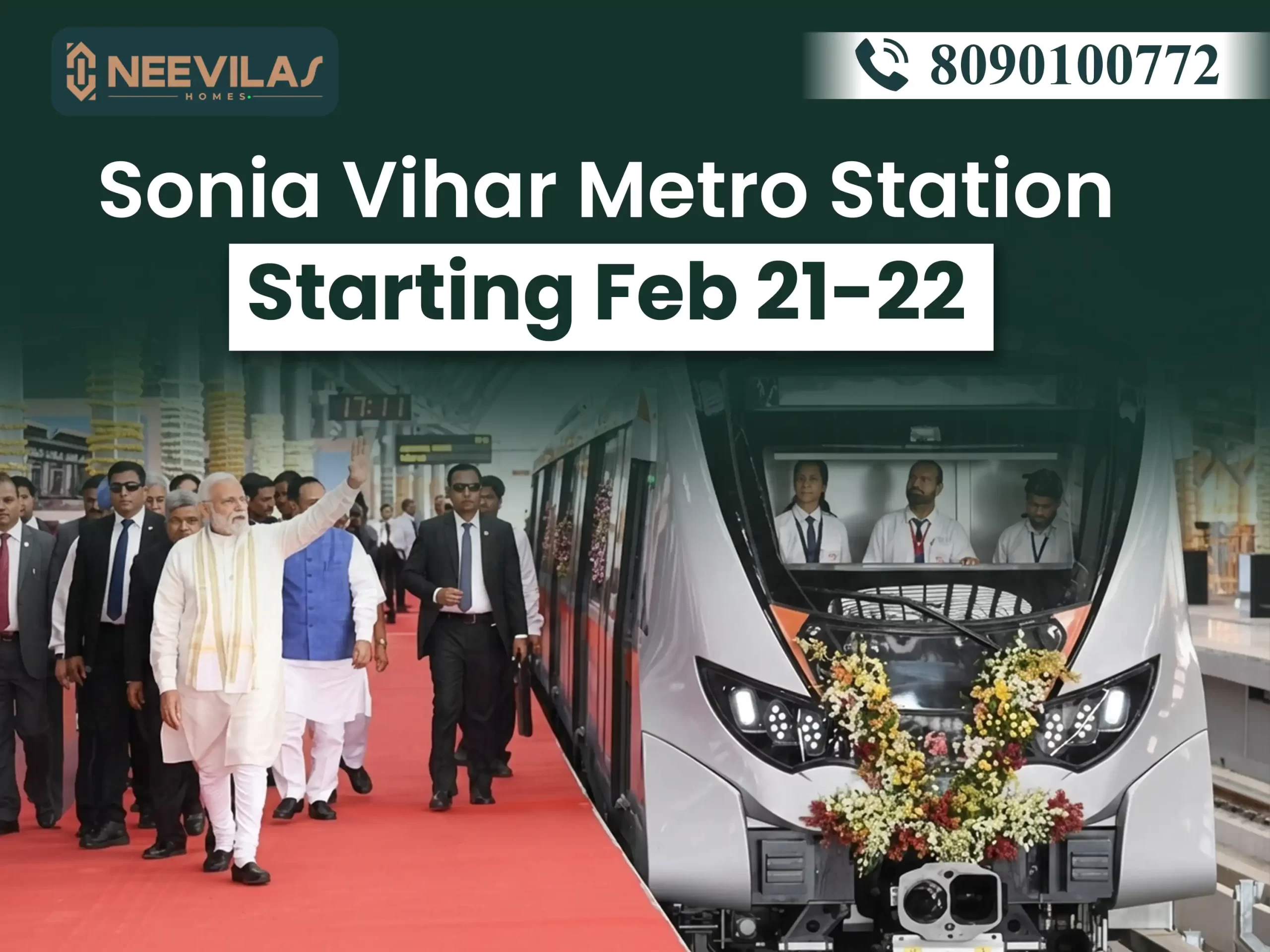
Breaking news for Delhiites! The long-awaited Sonia Vihar metro station is finally set to open its doors on February 21st or 22nd, 2026. PM Narendra Modi is expected to officially inaugurate this transformative 12.3 km stretch of the Pink Line metro station network, finally connecting Majlis Park to Maujpur. This inauguration marks a historic moment as the Pink Line becomes India’s first “Ring Metro,” offering a seamless circular commute around the capital.
The launch of the Sonia Vihar metro station and the Bhajanpura metro station on February 21-22 marks the end of an era of transit isolation for North East Delhi. For years, the “daily grind” for local residents has been defined by the bumper-to-bumper chaos of Pusta Road and the unpredictable bottlenecks at the Signature Bridge. By moving thousands of commuters from these congested streets to the sleek, elevated tracks of the Pink Line, travel times to Central and South Delhi are expected to be slashed by nearly 50%. Families in the Sabhapur Extension and Yamuna Vihar will no longer need to navigate hours of traffic; instead, the metro offers a predictable, air-conditioned 30-minute window to reach the city’s major hubs, effectively bringing the rest of Delhi to their doorstep.
This 12.3 km corridor, stretching from Majlis Park to Maujpur, serves as the final link that completes Delhi’s first “Ring Metro,” creating a seamless circular loop around the capital. With strategic stops at Burari metro station, Jharoda Majra, Jagatpur Village, Soorghat, and Khajuri Khas metro station, the DMRC is finally penetrating the heart of North East Delhi’s most densely populated neighborhoods. This “Metro Revolution” does more than just move people; it transforms the socio-economic landscape of the region. As PM Narendra Modi flags off this section, the immediate relief for daily commuters is matched by the massive economic potential being unlocked, turning previously “far-flung” areas like Sonia Vihar into prime, well-connected urban real estate.
Why Sonia Vihar and Sabhapur Extension Benefit the Most
If you live in Sonia Vihar or the Sabhapur Extension, your daily struggle with local traffic is about to end. Previously, reaching a major metro hub required long auto rides or multiple bus transfers. Now, the Sonia Vihar metro station provides:
- Direct Connectivity: Reach South Delhi, West Delhi, and even the Airport (via interchanges) in half the time.
- The Yamuna Bridge Advantage: A dedicated new bridge near Soorghat ensures the metro bypasses road traffic entirely, offering a scenic and fast route across the river.
- Last-Mile Ease: Areas like Sabhapur Extension are now just minutes away from the station, making it a dream for students and office-goers.
Completing the Ring of Majlis Park to Maujpur
This extension is the final piece of the Phase-IV puzzle. By linking Majlis Park directly to Maujpur, the DMRC has created a complete loop. But the celebration doesn’t stop there! PM Narendra Modi will also flag off the Deepali Chowk to Majlis Park section (9.9 km) of the Magenta Line.
This dual opening brings high-speed transit to even more neighbourhoods, including:
- Pushpanjali
- West Enclave
- Mangolpuri
- Peeragarhi
- Paschim Vihar
Impact on Property Prices
The “Metro Effect” is real, and it’s hitting North East Delhi hard. With the Sonia Vihar metro station becoming operational, real estate experts predict a 15% to 20% surge in property values in the surrounding areas.
For those owning property in Sabhapur Extension, the improved connectivity makes your home a prime asset. If you’ve been waiting to invest, now is the time before the official inauguration on Feb 21-22 drives prices even higher.
Ready for the First Ride?
Which station are you most excited about? Whether it’s the Bhajanpura metro station with its unique double-decker design or the convenience of Sonia Vihar, the map of Delhi has changed forever.